Build to Fight Zombies Co-op Guide (Up to 6 Players)
Split roles, cover different angles, and spend prep windows as a team instead of six solo builders.
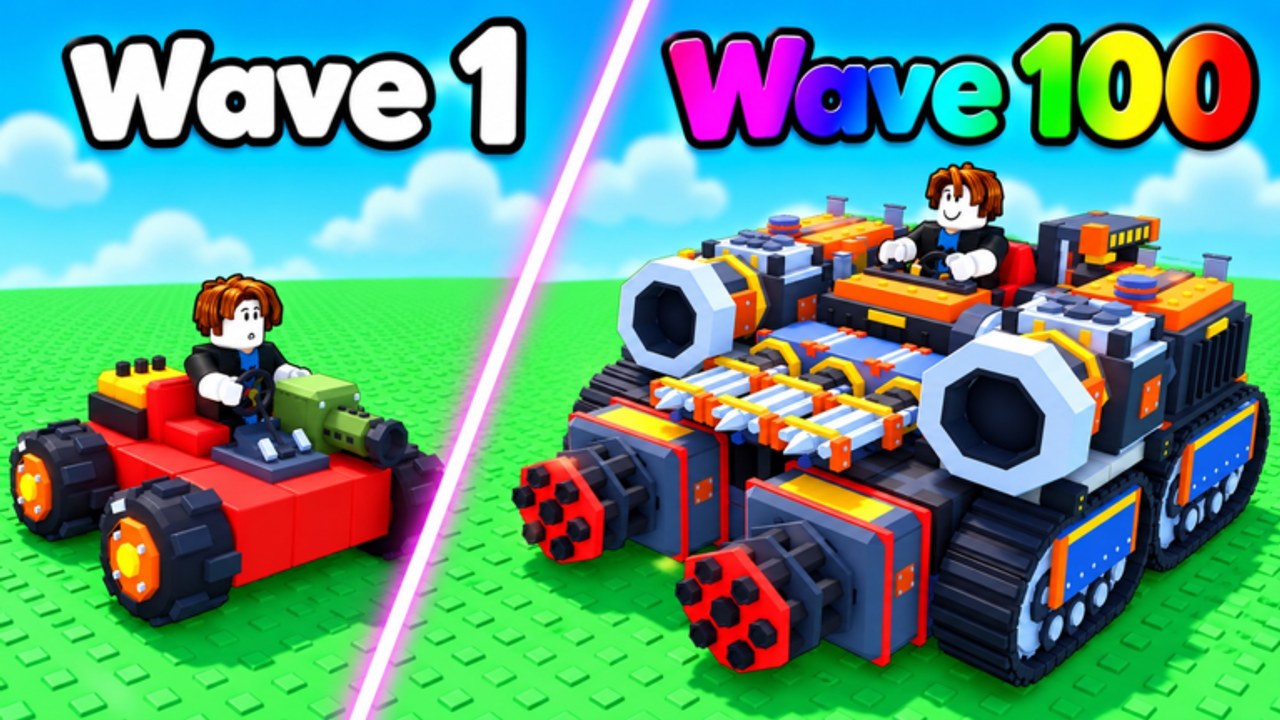
Build to Fight Zombies supports online co-op with up to six players while still allowing solo play. More tanks mean more guns and more armor on the field—but only if the lobby coordinates. Six identical forward batteries leave flanks open. Six silent builders waste prep timers on duplicated mistakes. This guide covers role split, facing plans, communication during prep, and how to recover when a teammate’s hull is failing.
Solo fundamentals still apply: read Getting Started, build with purpose via How to Build a Tank, and adapt threats with Survive Waves. Co-op multiplies those habits; it does not replace them.
Why co-op fails without a plan
Uncoordinated lobbies usually die to one of three patterns:
- Stacked facing — everyone aims at the same spawn lane; zombies walk in from the side.
- Stacked builds — everyone copies the same turret pile; no one owns flank DPS or spare plating focus.
- Silent prep — nobody calls the last wave’s failure mode, so six people decorate instead of answering damage.
Fixing those three issues matters more than finding a secret part combo. Talk early, even with short callouts.
Lobby size and expectations
- 2–3 players: Easy to assign left, center, right. Great for learning team habits.
- 4–5 players: Add depth—primary wall plus dedicated flankers or a repair-focused builder mindset.
- 6 players: Maximum coverage potential and maximum chaos if silent. Require a simple facing map every few waves.
You do not need formal roles with fancy names. You need agreed angles and a shared understanding of whether the next upgrade priority is guns or armor.
Role split that actually helps
Think in coverage jobs, not RPG classes:
- Primary holders — face the main zombie path with strong forward turrets and thick front armor.
- Flank holders — rotate to side approaches; bring enough DPS that a side swarm cannot ignore them.
- Flex — watches whichever lane started leaking last wave; rebuilds to plug gaps.
In a six-player lobby, two primary, two flank, and two flex is a clean default. Adjust when the map or spawn pattern clearly favors one direction. Re-state the plan when someone joins mid-session.
If your group prefers simpler language: “You two on front, you two on left, you two on right.” That sentence alone prevents many wipes.
Facing directions
Facing is free. During prep, physically orient tanks toward assigned approaches. Line up to block the main path when the funnel is obvious, but leave intentional side coverage so a single breakthrough does not rear-end the whole team.
Practical facing rules:
- Confirm assignments before the timer hits zero.
- Do not all copy the host’s angle “because it looked right.”
- After a flank breakthrough, rotate one primary tank temporarily rather than arguing mid-fight.
- When a teammate dies, survivors shift to cover the newly opened lane.
Visual discipline beats theory. If you can see three tanks staring at empty space while zombies chew the fourth, your facing plan failed.
Prep-window teamwork
Prep is the only time you can rebuild. Treat it like a pit stop:
- Ten-second debrief — “swarm right” or “heavies front” is enough.
- Personal critical repair — each player stabilizes their own near-death sections first. See Repair and Prep.
- Assigned upgrade — primary holders may add front guns; flank holders add side arcs; flex answers the called threat.
- Facing confirm — quick check that angles still match the plan.
- Ready — stop redesigning with two seconds left.
If chat is busy, use Roblox’s quick chat or voice if enabled in your party. The content of the callout matters more than the channel.
Firepower and armor as a team budget
Individually, each tank still needs a mix of turrets and plating. As a team, you can specialize slightly:
- Primary wall leans a bit heavier on armor and forward batteries.
- Flankers lean a bit heavier on turret coverage for wide arcs.
- Nobody should be pure glass unless the lobby explicitly accepts that risk.
When crowds spike, the whole lobby should hear “more guns.” When tanky zombies chunk hard, hear “more plates on hit faces.” Shared threat language keeps six build panels aligned.
Saving a failing teammate
A run ends for a player when their tank is fully destroyed, but the lobby can still continue. Helping a weak teammate extends everyone’s session:
- Cover the lane that is focusing them.
- Call for them to repair before adding vanity parts.
- Avoid stealing their assigned angle without telling them—confusion causes worse facing.
- After they stabilize, return to the original plan.
Do not flame someone for a bad first layout. Point them to How to Build a Tank and keep the next prep constructive.
Onboarding friends quickly
New teammates should finish the tutorial mindset even if they skip reading. Give them three rules:
- Build only in prep.
- Repair critical damage before upgrades.
- Face your assigned angle.
Then link Getting Started after the session. Teaching mid-wave with essays does not work; teaching with three rules does.
Solo players joining public servers
If you join a public six-player server without voice, still pick a lane that looks uncovered and hold it. Watch where zombies path. Add side guns if you spawn into a stacked-forward lobby. You cannot control strangers, but you can refuse to be the seventh forward copy.
Be ready to flex. Public lobbies change facing every wave without saying so. Your job is adaptive coverage.
What co-op does not change
- Codes status still belongs on the Codes Hub—no reliable codes confirmed as of late November 2026.
- Scripts are not required and none are verified specifically for this place on major indexes.
- Wave reading still follows Survive Waves.
- Patch changes still appear under Updates.
Co-op is coordination layered on the same tank loop created by Khorovats.
Session checklist
Before first wave: assign angles.
After first hard wave: restate threat (crowd vs tanky).
Every prep: repair, one team-aligned upgrade, facing check.
On teammate critical: cover their lane.
On wipe: note which angle failed and fix that next run.
Related reading: Guides Hub, Controls, Links Hub. Play together like a formation, not like six solo campaigns sharing a server.
Frequently Asked Questions
Quick answers for tank builds, waves, and codes.
How many players can join one server?
Up to six players in online co-op. Solo play is also fully supported.
What is the most important co-op habit?
Agree on facing angles so tanks cover different approaches instead of stacking the same lane.
Should every teammate use the same build?
No. Share a threat plan, but let primary and flank roles bias toward armor or wide turret coverage as needed.
What should we say during prep?
Call the last failure mode in a few words, repair first, then confirm who covers which angle.
A teammate keeps dying early. What helps?
Cover their focused lane, remind them to repair before upgrading, and share the Getting Started or tank build guides.